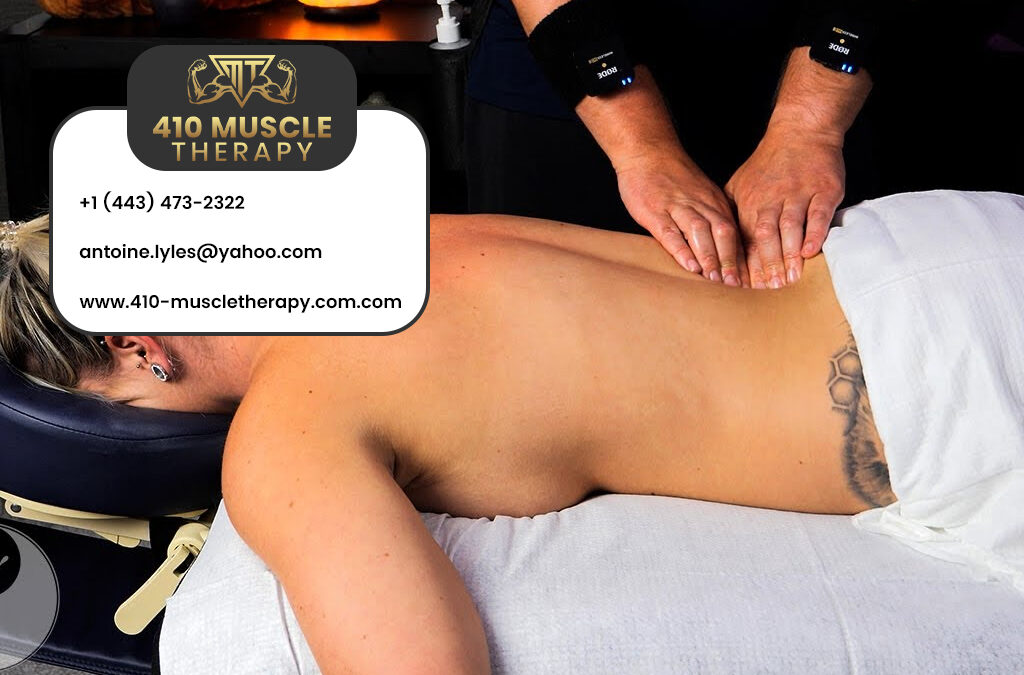
Does your lower back feel stiff when you stand up, bend, drive, or sit too long? That dull ache can make normal tasks feel frustrating and tiring. Many people search for massage for lower back pain because they want focused relief without depending only on pain pills.
Your lower back, also called the lumbar area, carries much of your body weight, so those muscles can easily become tight, sore, and overworked.
At 410 Muscle Therapy in Maryland, massage therapy focuses on relaxing tight back muscles, improving comfort, and helping your body move with less restriction. Mayo Clinic notes that, for back pain caused by tense or overworked muscles, massage might help.
How Lower Back Massage Works
Lower back massage works in a surprisingly healing way.
Tight muscles, aching spots, and constricted soft tissue surrounding the lower back, hips, glutes, and surrounding muscles can all be relieved with massage therapy for lower back pain.
A qualified therapist examines surrounding regions that might be increasing pressure and making movement more difficult because posture, prolonged sitting, tension, poor movement patterns, and tight hips can all cause pain. .
What Causes Back Muscle Tightness?
Tightness in the back muscles can develop gradually over time. Until the lower back becomes painful, tight, or difficult to move, many people choose to ignore it.
| Cause | How It Affects the Lower Back |
| Long sitting | Tightens hips and strains the lumbar area |
| Poor posture | Adds pressure to lower back muscles |
| Heavy lifting | Overworks back muscles and soft tissue |
| Weak core muscles | Makes the lower back work harder |
| Stress | Keeps muscles tense for long periods |
| Poor sleep position | Irritates back muscles overnight |
| Limited flexibility | Reduces smooth movement in hips and spine |
How Massage Supports Lumbar Pain Relief
Massage can relieve lumbar pain by relaxing tight muscles in the lower back, making the area feel less stiff, pulled, and limited. It may also enhance blood flow, relax tired soft tissue, and allow for smoother movement after prolonged sitting, driving, workouts, or physical labour.
The National Center for Complementary and Integrative Health says there is low-quality evidence that massage therapy may be helpful for acute low-back pain, while several mind and body approaches may help chronic low-back pain.
Best Types of Chronic Back Pain Massage
Not every back ache is the same. Some are sharp, and some are dull and constant. Depending on how you feel, your therapist might use different techniques:
1. Myofascial Release
Your muscles are wrapped in a thin, stretchy layer called fascia. If this layer gets stuck, your back feels like it is wearing a shirt that is two sizes too small. Myofascial release helps stretch that layer out so you can move. It is great for chronic pain and limited mobility.
2. Deep Tissue Massage
This style goes deep into the muscle layers to find “knots” or trigger points. It is one of the most popular choices for a massage for lower back pain. You can learn more about how it compares to other styles here.
3. Cupping Therapy
Have you ever seen athletes with circular marks on their backs? That is cupping therapy. It uses suction to pull the muscle upward, which helps blood flow into tight areas. It is excellent for muscle pain recovery.
4. Infrared and Hot Stone
Heat is like magic for a sore back. Hot stone massage uses warm stones to melt away tension. For even deeper relief, infrared therapy uses special light to warm the muscles from the inside out, helping with joint stiffness.
5. Trigger Point Therapy
Trigger points are small tight spots in muscles that may send pain to nearby areas. In the lower back, trigger points may appear in the back muscles, hips, or glutes.
Trigger point work may help release these tight spots and reduce the pulling feeling around the lumbar area. For more details, visit trigger point therapy.
6. Stretch Therapy
Stretch therapy can support lower back comfort by improving flexibility in the hips, hamstrings, glutes, and lower back. This matters because tight hips often make the lower back work harder.
For people with stiffness and limited movement, stretch therapy in Maryland can be a helpful part of a wider care plan.
Lower Back Pain Relief Timeline
Here is a simple flowchart showing how massage therapy may support lower back pain relief.
Step 1: Pain or Tightness Starts
Your lower back feels stiff, sore, heavy, or hard to move.
Step 2: Muscles Guard the Area
The body tightens nearby muscles to protect the painful area.
Step 3: Movement Becomes Limited
Bending, standing, sitting, or walking may feel uncomfortable.
Step 4: Massage Assessment Begins
A therapist checks tight muscles, posture patterns, hips, and movement limits.
Step 5: Soft Tissue Work Starts
Massage targets tight muscles, trigger points, fascia, and restricted tissue.
Step 6: Movement Feels Easier
The lower back may feel lighter, looser, and less tense.
Step 7: Maintenance Helps Prevent Repeat Tightness
Stretching, posture habits, and follow-up massage may reduce future flare-ups.
When Lower Back Pain Comes from Sitting
Long sitting can tighten the hips, weaken the glutes, and place extra pressure on the lower back, causing stiffness and muscle tightness. Massage may help release this tension, but lasting relief also needs better habits like standing breaks, gentle stretching, hip mobility, and proper chair support.
For posture and movement support, corrective movement therapy may help people who keep feeling the same tightness again and again.
Is It Time for Back Pain Massage?
Chronic back pain massage may help when discomfort keeps returning or does not fully go away. It may be useful when the pain feels muscular, tight, or linked to daily habits.
You may benefit from massage if you often feel:
- Tightness across the lower back
- Soreness after sitting too long
- Pain after bending or lifting
- Stiffness when waking up
- Tight hips or glutes
- Muscle knots around the lower back
- Pain that improves with movement
- Lower back fatigue after work
- Limited bending or twisting
- Stress-related body tension
Can Myofascial Release Help Lower Back Pain?
Myofascial release may help when the lower back feels tight, stuck, or restricted. The goal is to work on stiff fascia and tight soft tissue that may limit movement.
This method can be useful for people who feel wide, pulling discomfort instead of one sharp pain point. It may also help when the hips, glutes, and lower back all feel connected.
Mayo Clinic explains that myofascial release uses massage and stretching to loosen muscles and joints, which may indirectly ease back pain.
You can also compare myofascial release vs deep tissue massage if you want to understand which method may fit your body better.
Home Tips After Lower Back Massage
What you do after a massage matters. Simple habits can help your lower back stay loose longer. They are :
- Drink water after your session.
- Move gently instead of sitting for hours right away.
- Take short walking breaks.
- Use heat if your muscles feel tight.
- Avoid heavy lifting if your back feels tender after deep work.
- Gentle stretching may also help, especially for the hips, hamstrings, and glutes.
Do not force stretches or push into sharp pain. Slow and steady movement is usually better than aggressive pulling.
You can read more about stretch therapy vs massage therapy to see how both can support better mobility.
Why to Choose Local Services?
Choosing the right therapist matters for lower back pain. 410 Muscle Therapy in Maryland helps people with back tightness, chronic pain, limited mobility, and stress-related tension through focused massage that supports better comfort, movement, and relief.
You can also explore the best massage services in Maryland or visit the 410 Muscle Therapy Google Business Profile for location details, updates, and business information.
The internal links used for this blog were selected from the provided 410 Muscle Therapy URL list.
Conclusion
Massage therapy for lower back pain can be a helpful option when tight muscles, stress, posture, or daily strain make movement harder. It may support lumbar pain relief, reduce back muscle tightness, and help the body feel more relaxed.
If your lower back feels stiff, sore, or overworked, 410 Muscle Therapy in Maryland can help you choose the right massage approach for your needs. With the right care and simple daily habits, your back can feel more supported and easier to move.
FAQs
1. Is massage good for lower back pain?
Yes, massage may help lower back pain caused by tight muscles, stress, or soft tissue tension.
2. What massage is best for lower back pain?
Deep tissue, myofascial release, trigger point work, and stretch therapy may help different pain patterns.
3. Can massage help lumbar pain relief?
Yes, massage may support lumbar pain relief when tight muscles are adding pressure to the lower back.
4. How often should I get a massage for lower back pain?
It depends on your pain level, but chronic tightness may need regular sessions before maintenance care.
5. Can massage help back muscle tightness?
Yes, massage can help relax tight back muscles and improve soft tissue movement.
6. Is chronic back pain massage safe?
It may be safe for muscle-related pain, but severe or nerve-related pain should be checked first.
7. Should lower back massage hurt?
No, massage may feel firm, but it should not cause sharp or severe pain.
8. Can sitting too long cause lower back pain?
Yes, long sitting can tighten hips and place extra stress on the lower back.
9. Is deep tissue massage good for lower back pain?
Deep tissue massage may help when lower back pain comes from deep muscle tightness.
10. Does 410 Muscle Therapy offer lower back massage in Maryland?
Yes, 410 Muscle Therapy offers massage services that may help lower back tightness and discomfort.