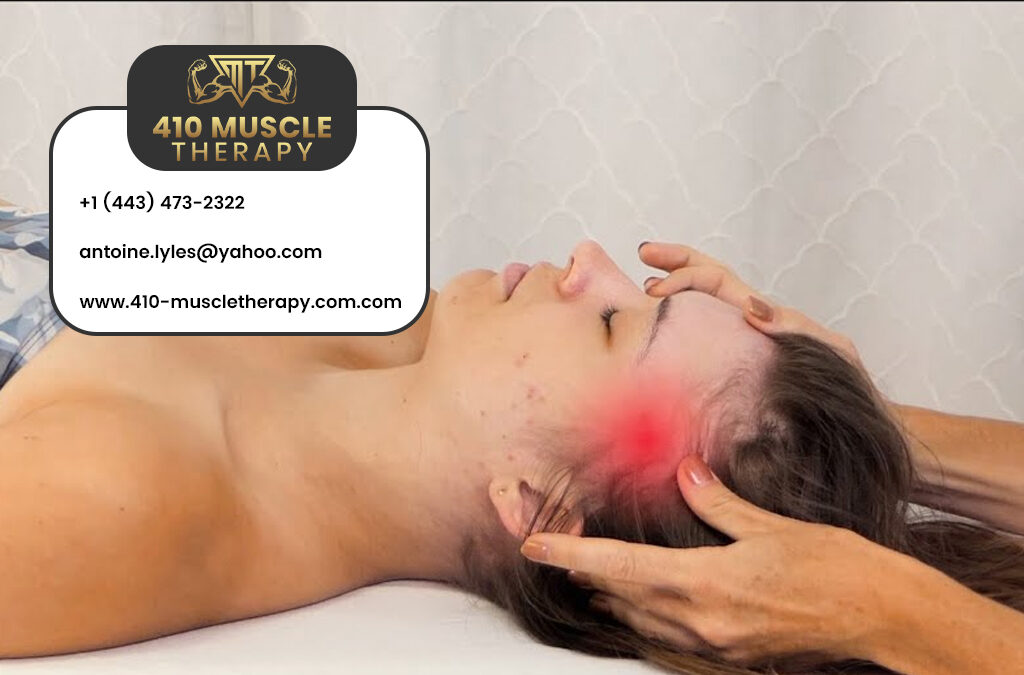
Have you ever experienced a severe headache that feels like a tight band pressing your skull? Next time it occurs, take a closer look at your physique. Are you shrugging your shoulders up to your ears? Do you have a tightly clenched jaw? Was your neck as rigid as a board after using your phone?
The truth is, the real root of your head pain might not actually be in your head at all, it is hiding in muscles that stay clenched all day long. While it isn’t a magic cure for every single type of ache, specialized massage for headaches targets these hidden traps.
At 410 Muscle Therapy, we don’t just blindly press on sore spots; we use precise, careful bodywork to calm the underlying scalp, neck, and shoulder tension at the source.
The Hidden Pattern Behind Many Headaches
Headaches can feel simple, but the body pattern behind them is often more complex. A headache may show up in the forehead, temples, scalp, or back of the head, but the tension may start lower.
Here is quick table for you to understand what body signal connects you to headache
|
Body Signal |
How It May Connect to Headaches |
|
Tight neck |
Can pull near the base of the skull |
|
Raised shoulders |
Can increase upper-body strain |
|
Jaw clenching |
Can add pressure near the temples |
|
Scalp tightness |
Can make the head feel sore or sensitive |
|
Upper back stiffness |
Can affect neck position |
|
Stress breathing |
Can keep the body tense |
This is why a good headache massage should not only chase the pain. It should look at the tension pattern that may be feeding it.
Start With the Trigger, Not Just the Pain
A smart session begins by asking what sets the headache off. Some people notice headaches after computer work. Others feel them after stress, poor sleep, driving, workouts, or jaw clenching.
Screen Time and Neck Strain
Phones and laptops often pull the head forward. Over time, the neck and upper back work harder than they should.
Massage may help reduce tightness in the neck, shoulders, and base of the skull. If neck discomfort is part of your headache pattern, this guide on massage for neck pain can help you understand the connection.
Stress and Shoulder Guarding
Stress can make the body brace without you noticing. Your shoulders rise. Your jaw tightens. Your breathing becomes shallow.
The American Migraine Foundation lists stress as one of the common migraine triggers, along with sleep changes, dehydration, weather changes, and other factors.
Massage may help the body move out of that guarded state. It can support relaxation and reduce the muscle tension that often builds around stress.
Jaw Clenching and Temple Pressure
Some people clench their teeth during stress or sleep. This can tighten the jaw, temples, neck, and side of the head.
Gentle massage around the jaw area, temples, neck, and shoulders may help calm this tension pattern. It should feel careful, not aggressive.
The 3-Zone Headache Massage Approach
A different way to understand headache massage is by zones. Instead of only asking, “Where does it hurt?” the session can look at three connected areas.
Zone 1: Scalp and Temples
This area may feel tight, sore, or sensitive. Some people feel pressure around the forehead or sides of the head.
Gentle scalp and temple work may help the head feel less heavy. This kind of work is usually calming and should not feel painful.
Zone 2: Neck and Base of Skull
The base of the skull is a common tension area. When the upper neck is tight, it can create pulling or pressure that travels into the head.
This is often an important area for tension headache massage. The pressure should be slow and controlled.
Zone 3: Shoulders and Upper Back
Tight shoulders can keep the neck under stress. The upper back can also become stiff from posture, driving, or desk work.
Massage in this zone may help the neck relax more easily. It can also help reduce the “heavy shoulder” feeling that many people notice before a headache.
Which Massage Methods Fit Headache Relief?
There is no single method that works for everyone. The best approach depends on the person, the symptoms, and the body’s sensitivity that day.
Acupressure for Headache and Stress Patterns
Acupressure uses steady pressure on specific points. It may be used around the head, neck, shoulders, hands, or upper body.
For people who feel stress and pressure together, acupressure for stress may be a helpful support option.
Trigger Point Therapy for Muscle Knots
Trigger points are tight muscle spots that may send discomfort to another area. Some knots in the neck, shoulders, and upper back can refer pain toward the head.
This work should be specific and careful. If it feels too intense or increases your headache, the pressure should be changed.
You can learn more about trigger point therapy and how muscle knots can affect pain patterns.
Myofascial Release for Restricted Tissue
Fascia is connective tissue around muscles. When it feels tight, the neck and shoulders may feel restricted or stuck.
Myofascial release may help when headache discomfort is linked with tight upper-body tissue, limited movement, or chronic tension.
Deep Tissue Massage for Built-Up Tightness
Deep tissue massage may help when tension has built up over time. It may focus on the upper back, shoulders, and neck.
But deep does not mean harsh. The goal is relief, not forcing through pain. This guide on deep tissue massage explains what deeper bodywork may involve.
Massage for Headaches vs Migraine Support
Headaches and migraines are generally different conditions. For example, a person with a tension headache can experience a feeling of tightness or pressure in the area. On the other hand, a migraine may involve severe pain and nausea, among other symptoms.
Mayo Clinic explains that migraine symptoms can interfere with daily life and may include nausea, vomiting, and sensitivity to light and sound.
Headache massages should be gentle. While some individuals find relief with massages during intervals of their migraines, some experience too much sensitivity during a headache episode.
Massages help reduce stress and muscle pain; however, it should not be used to replace medicine. It is advisable to consult a physician if you have regular migraines.
What a Headache-Focused Session Should Feel Like
A headache massage session should feel calm and planned. It should not feel rushed or random.
A good session may include:
- A short talk about your headache pattern
- A pressure comfort check
- Gentle warm-up for the upper body
- Focused work on tense areas
- Feedback during the session
- Simple aftercare suggestions
If you are new to massage, this guide on what happens during a massage can help you feel more ready.
The therapist may ask where the headache starts, where it spreads, how often it happens, and what seems to trigger it. They may also ask about screen time, stress, sleep, jaw clenching, posture, and neck pain.
Daily Habits That Keep Tension From Rebuilding
Massage can help reduce tension, but daily habits matter too. If the same stress repeats every day, the same headache pattern may come back.
Try simple habits like:
- Take short screen breaks
- Keep your shoulders relaxed
- Avoid clenching your jaw
- Drink enough water
- Breathe slowly during stress
- Keep your phone at eye level
- Stretch gently if it feels safe
- Check your pillow support
- Move your neck during the day
- Notice what triggers your headaches
These habits do not need to be complicated. Small changes can reduce stress on the neck, scalp, and shoulders.
A Simple Headache Relief Timeline
Headache relief from massage may happen in stages. Everyone responds differently, but this simple timeline can help set clear expectations.
First Session: Understand the Pattern
The first session should focus on learning your symptoms. The therapist may work gently and check how your body responds.
The goal is to reduce tension without overwhelming the body.
First Few Weeks: Calm the Main Tension Areas
If your headaches are linked with scalp neck tension, stress, or shoulder tightness, regular sessions may help reduce the buildup.
This is also the time to notice daily triggers like posture, sleep, phone use, or jaw clenching.
Ongoing Care: Support Better Comfort
Once symptoms feel more controlled, sessions may be spaced out. The goal is not to depend on massage forever.
The goal is to help your body stay less tense and more comfortable.
What Research Says About Massage and Pain
Massage is widely used for pain and relaxation, but it should be described honestly. The National Center for Complementary and Integrative Health says research suggests massage may help relieve some kinds of pain, but evidence is not strong for every condition and relief may be short term.
That means massage for headaches should be viewed as supportive care. It may help reduce tightness, stress, and discomfort for some people, but results can vary.
Why Choose 410 Muscle Therapy?
In case you seek effective treatment for your tension, stress, and stiffness in the muscles that cause headaches, try 410 Muscle Therapy. We do not subject your body to hard or fast work because we understand your comfort and pressure needs.
Conclusion
Massage for headaches may help when stress, scalp neck tension, tight shoulders, or muscle guarding are part of the problem. It can support relaxation, better movement, and short-term comfort.
Still, headaches can have many causes. If symptoms are sudden, severe, unusual, or getting worse, medical care should come first.
A good massage plan should be calm, careful, and based on your body’s response. If tight neck muscles, stress, or upper-body tension are adding to your headaches, professional massage therapy for pain relief may help you feel more supported.
FAQs
1. What is massage for headaches?
Massage for headaches is bodywork that focuses on tight muscles around the scalp, neck, shoulders, and upper back. It may help reduce tension that adds to headache discomfort.
2. Can massage cure headaches?
Massage does not cure every type of headache. It may support relief when stress, muscle tightness, or scalp neck tension is part of the problem.
3. Is tension headache massage helpful?
Yes, tension headache massage may help relax tight neck, scalp, and shoulder muscles. It should feel controlled and should not make symptoms worse.
4. Can massage help with migraine support?
Massage may support migraine care by helping reduce stress and muscle tension. It should not replace medical migraine treatment or be used during severe symptoms without guidance.
5. What areas are worked during headache massage?
A therapist may focus on the scalp, temples, jaw area, neck, shoulders, upper back, base of skull, chest, arms, and hands. These areas can all add to headache-related tension.
6. Can scalp neck tension cause headaches?
Scalp neck tension can add pressure around the head, temples, and base of the skull. Massage may help relax these tight areas and improve comfort.
7. How often should I get massage for headaches?
It depends on your headache pattern, stress level, and muscle tension. Some people start weekly for a short time, then reduce visits as symptoms improve.
8. Should headache massage be painful?
No, headache massage should not be harsh or painful. Tell your therapist if pressure increases your headache, dizziness, or sensitivity.
9. When should I avoid massage for headaches?
Avoid massage and seek medical help if your headache is sudden, severe, linked with injury, or comes with weakness, confusion, fever, vision changes, or stiff neck. These symptoms need medical attention.
10. What can I do after a headache massage?
Drink water, move gently, relax your shoulders, and avoid heavy activity right away.
Notice how your body responds and share any changes with your therapist next time.