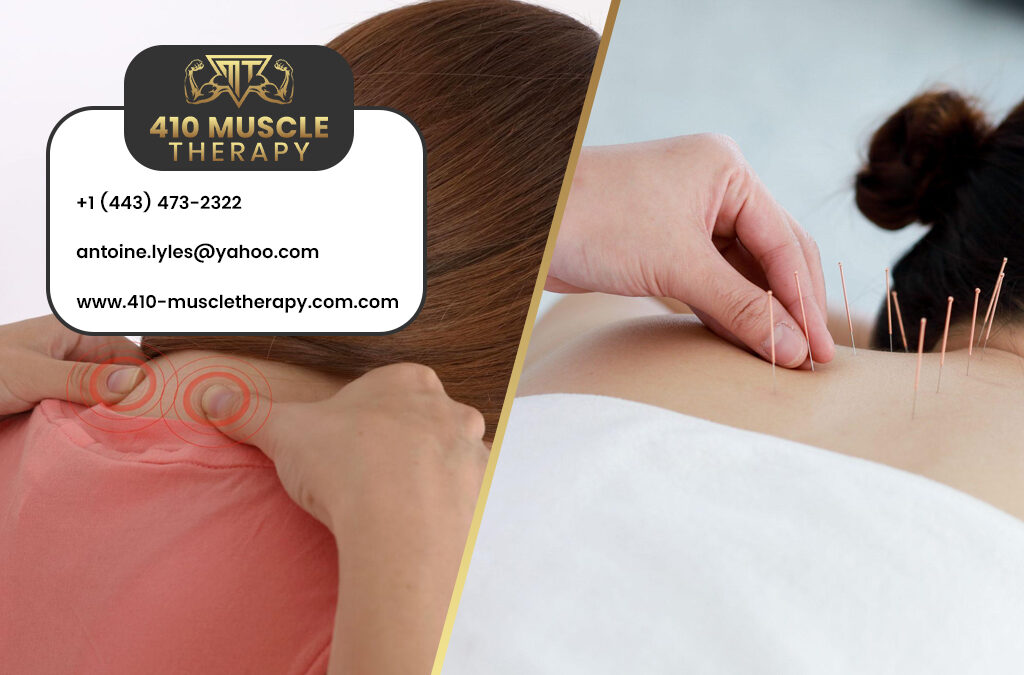
When it comes to holistic therapies for pain relief, stress reduction, and overall wellness, acupressure and acupuncture are two of the most popular and effective options. While both methods originate from traditional Chinese medicine and target similar concepts of energy flow in the body, they use different techniques and have distinct approaches.
At 410 Muscle Therapy, we often incorporate both therapies into our holistic treatment programs. However, many clients ask us: What’s the difference between acupressure and acupuncture?
In this blog, we’ll explore the key differences between these two therapies, their benefits, and how they can support your health and wellness.
What Is Acupressure?
Acupressure is a form of manual therapy that involves applying pressure to specific points on the body. These points, known as acupoints, are believed to correspond to various systems and organs in the body. By applying pressure to these points, acupressure helps to release muscle tension, promote relaxation, and stimulate the body’s natural healing processes.
How Does Acupressure Work?
Acupressure works by stimulating energy flow (known as “Qi” or “Chi”) through the body. According to traditional Chinese medicine, blockages in the flow of energy can lead to pain, tension, and illness. By pressing on specific acupoints, acupressure helps clear these blockages and restore balance.
At 410 Muscle Therapy, acupressure is commonly used to relieve stress, reduce muscle pain, and promote general relaxation.
What Is Acupuncture?
Acupuncture is a similar therapy to acupressure but involves the insertion of fine needles into specific points on the body. The goal of acupuncture is to stimulate these points and balance the body’s energy (Qi) flow.
How Does Acupuncture Work?
Acupuncture targets the same acupoints used in acupressure, but instead of applying pressure manually, acupuncture uses needles to stimulate these points. The needles are typically inserted to a shallow depth and are believed to encourage energy flow, improve circulation, and support the body’s natural healing processes.
Acupuncture is often used for more chronic conditions, such as chronic pain, headaches, and muscle stiffness, and it is particularly popular in managing conditions related to musculoskeletal health.
Key Differences Between Acupressure and Acupuncture
Though both therapies are based on the same principles of energy flow and balance, there are several key differences between acupressure and acupuncture.
1. Technique Used
- Acupressure: Involves applying manual pressure to specific points on the body using fingers, thumbs, or palms.
- Acupuncture: Involves the insertion of fine needles into acupoints to stimulate energy flow.
2. Pain Level
- Acupressure: Generally, acupressure is pain-free. The pressure applied is firm but should not cause discomfort.
- Acupuncture: Most people experience minimal discomfort from the needles. However, some may feel a mild sensation during insertion.
3. Treatment Duration
- Acupressure: A typical acupressure session lasts around 30 to 60 minutes.
- Acupuncture: Acupuncture sessions generally last 30 minutes to 1 hour.
Benefits of Acupressure
Acupressure offers several benefits for those seeking relief from stress, pain, and discomfort.
1. Stress Relief
Acupressure stimulates the body’s relaxation response, helping to reduce levels of cortisol (the stress hormone). This makes acupressure an effective tool for managing stress.
Many people pair acupressure with other relaxation therapies such as Hot Stone Massage Maryland for enhanced relaxation.
2. Pain Relief
Acupressure helps relieve muscle tension, joint pain, and discomfort caused by tight muscles. It’s commonly used for conditions like back pain, neck pain, and headaches.
For deeper muscle issues, some clients also combine acupressure with Deep Tissue Massage Maryland.
3. Improved Circulation
By stimulating specific acupoints, acupressure improves blood flow and helps deliver oxygen and nutrients to the body’s tissues, supporting healing and recovery.
Benefits of Acupuncture
Acupuncture is a widely recognized therapy that offers numerous benefits, particularly for chronic conditions.
1. Chronic Pain Relief
Acupuncture is known for its effectiveness in treating chronic pain, including back pain, arthritis, migraines, and musculoskeletal pain.
Acupuncture is often used alongside other treatments like Cupping Therapy Maryland to help release muscle tension and improve circulation.
2. Improved Sleep Quality
Acupuncture helps regulate the body’s natural rhythms, making it useful for individuals suffering from insomnia or disrupted sleep cycles.
3. Anxiety and Stress Management
Acupuncture has been shown to reduce anxiety and help people manage stress by balancing the body’s energy and promoting relaxation.
Which Therapy Is Right for You?
Both acupressure and acupuncture offer similar benefits, but the right therapy for you depends on your preferences, needs, and condition.
- Acupressure is ideal if you are looking for a gentler, non-invasive treatment that you can perform yourself or have done on the body’s surface. It’s perfect for those dealing with stress, mild pain, or muscle tension.
- Acupuncture is a better option for individuals dealing with chronic pain, deep muscle tension, or conditions that require more targeted treatment. Acupuncture is commonly used for long-term issues like chronic headaches, migraine management, and joint pain.
Many people find that combining both therapies provides the best results. For example, you might begin with acupressure to relieve surface tension and then follow up with acupuncture for deeper issues.
For people looking to improve mobility and muscle function, therapies like Infrared Therapy in Maryland may also be beneficial.
What to Expect During a Session
Whether you choose acupressure or acupuncture, here’s what you can expect during your session:
Acupressure:
- Initial Consultation: A therapist will discuss your specific symptoms or tension points.
- Pressure Application: Pressure is applied to various acupoints.
- Comfortable Environment: You will typically lie on a massage table, fully clothed.
Acupuncture:
- Needle Insertion: Thin needles are inserted into specific acupoints.
- Comfortable Environment: You may feel mild discomfort during needle insertion, but it’s generally not painful.
- Post-Treatment Relaxation: After your session, you may feel relaxed and rejuvenated.
How Often Should You Get Acupressure or Acupuncture?
The frequency of treatments depends on the severity of your condition:
- Acupressure: Weekly sessions may be helpful for chronic stress or mild pain relief.
- Acupuncture: Biweekly or monthly sessions are often recommended for those dealing with more serious conditions like chronic pain or musculoskeletal injuries.
Why Choose 410 Muscle Therapy?
At 410 Muscle Therapy, we offer both acupressure and acupuncture as part of our holistic therapy options. Our therapists are highly trained and experienced in both modalities, ensuring that you receive personalized care to meet your wellness goals.
We combine traditional treatments like acupressure and acupuncture with other services such as sports massage, infrared therapy, and deep tissue massage to provide comprehensive care that addresses your individual needs.
Final Thoughts
Both acupressure and acupuncture are powerful therapies that can help with stress relief, pain management, and muscle recovery. While acupressure is gentler and focuses on applying pressure to acupoints, acupuncture uses needles to stimulate deeper tissue and energy flow.
At 410 Muscle Therapy, we tailor our treatments to meet your individual needs and help you achieve your best health and wellness.
If you’re unsure which therapy is best for you, schedule a consultation with our team, and we’ll guide you through the options to find the perfect solution.
Timonium, Maryland