
In This Blog, We Will Learn
- Whether deep tissue massage should hurt
- Why some muscles may feel tender
- How to know when pressure is too strong
- What soreness afterward may feel like
- When to speak up or seek medical advice
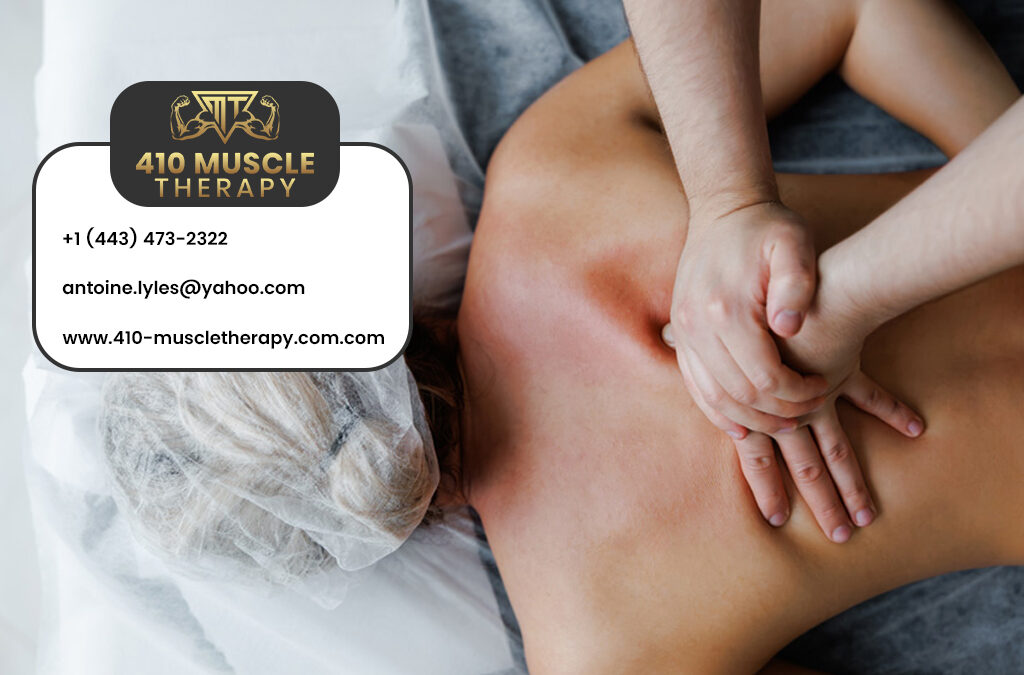
Does deep tissue massage have to hurt to work? The answer is no. While it uses firmer and slower pressure than a relaxation massage, the session should still feel safe and manageable. If you are wondering is deep tissue massage painful, knowing what to expect can make your first session much easier.
At 410 Muscle Therapy, pressure can be adjusted to your comfort level. This guide covers normal sensations, muscle tenderness, soreness after a session, and the signs that pressure may be too strong.
Straight Answer: Should Deep Tissue Massage Hurt?
Deep tissue massage may feel intense or tender in tight areas, but it should not feel sharp, unbearable, or frightening. The therapist should work within your comfort level. “Deeper” does not automatically mean “more painful.” A good session balances firm pressure with relaxation, not endurance.
What Does Deep Tissue Massage Feel Like?
Unlike Swedish or relaxation massage, a deep tissue massage therapy can be different from the two. You might find that there is firm pressure, slow strokes, and specific focus on tense spots.
There is a possibility of feeling some stretch or tenderness in some muscles. Various parts of the body will have various experiences. Tightness in the shoulder will feel more tender than other parts.
Does Deep Tissue Massage Hurt?
The answer to “Does deep tissue massage hurt?” depends on several factors. Pressure used, muscle tightness, personal sensitivity, previous injuries, stress level, and therapist technique all play a role. One person’s “firm pressure” may feel too intense to another person. There is no single pressure level that works for everyone. Your comfort level guides the session.
Why Does Deep Tissue Massage Hurt Sometimes?
Deep tissue massage sometimes causes tenderness or discomfort for the client. Tension and tenderness in certain tight muscles can be felt during deep tissue massage. Excessive pressure is another factor that can cause discomfort, because just like before, more pressure is not necessarily better.
A first-time sensitivity is very normal because clients who have never been exposed to deep tissue massage may require some time to get accustomed to this type of therapy. Another issue which can lead to discomfort is poor communication between the therapist and the client.
Pressure Traffic Light: What Should You Feel?
Green: Comfortable Pressure
Firm pressure that feels useful and manageable. You can breathe normally and relax.
Yellow: Speak Up
Pressure feels too intense, makes you tense your body, or causes you to hold your breath. Ask the therapist to adjust.
Red: Stop or Change Technique
Sharp, burning, electric, severe, or sudden pain should not be ignored. Tell the therapist immediately.
Good Pressure vs Too Much Pain
Manageable sensations would be something like strong pressure, slight soreness, stretching, or temporary sensitivity. Unmanageable sensations would be sharp pain, burning, numbness, tingling, shooting pain, or severe pain. You should never be embarrassed to ask for less pressure.
Does Deeper Pressure Mean a Better Massage?
Absolutely not. A successful massage does not depend on how much pain you can endure. You should feel comfortable; therefore, pressure, tempo, technique, and target area should be adjusted by the professional according to your reaction. Pain threshold cannot be used as some kind of criterion.
Why Communication During Massage Matters
Your therapist cannot always know exactly what you feel. Simple statements help:
- “That pressure is too strong,”
- “Can you go a little lighter?”
- “That area feels sensitive,”
- “This pressure feels good.”
Communication helps the therapist adapt the session to your needs.
Is Soreness Normal After Deep Tissue Massage?
Indeed, there are people who get a little bit of tenderness or soreness after undergoing deeper bodywork therapy. But then again, not all people become sore, and experiencing intense pain is something unusual. It should never be taken as evidence that the massage worked.
Deep Tissue Massage Pain After a Session
It is possible that slight tenderness after the massage may be similar to slight muscle soreness after exercise. If the pain requires attention, it will be very severe, increasing in intensity, associated with swelling, connected with numbness or weakness, persisting beyond normal time, or occurring after an injury.
24-Hour Body Check
Ask yourself these questions:
- How does the area feel now?
- Is tenderness mild and improving, or getting worse?
- Can you move normally?
- Is there swelling, numbness, or unusual weakness?
Mild tenderness and severe pain are not the same thing. Pay attention to how your body changes after the session.
What Can Help After Deep Tissue Massage?
Slow movements, adequate rest, proper hydration, and listening to your therapist’s advice can be useful. In case your body is very sore, you should not engage in another high-intensity exercise right away. Do not make assumptions regarding “drinking water to flush toxins out of your body.”
Can You Ask for Less Pressure?
Yes. Clients can ask for less pressure before the session, during the massage, or at any time the sensation changes. A deep tissue session can still be useful even when pressure is adjusted.
When Pain During Massage Is Not Normal
Warning signs include:
- Sharp pain
- Burning
- Electric or shooting sensations
- Sudden numbness
- Severe discomfort
- New weakness
- Strong pain around a recent injury.
Speak up immediately when you feel these signs in your body.
Who Should Be More Cautious With Deep Tissue Massage?
A person may require medical advice and possibly even a modified massage if they recently had an injury, underwent a surgery, are at risk of blood clots, suffer from a bleeding condition, severe osteoporosis, fractures, skin infection or other major medical problems.
First-Session Comfort Checklist
Before the massage, ask or tell the therapist:
- “This is my first deep tissue session,”
- “These areas feel sensitive,”
- “I prefer moderate or gradual pressure,”
- “I have these past injuries or health concerns,”
- “Please check in if you increase pressure.”
During the process, breathe naturally, observe if you are becoming tense, and speak out at an early stage. Do not wait until the pressure is too much for you to bear. A proper massage is a dialogue between you and your body.
Deep Tissue Massage Maryland: What to Look for in a Therapist
If one is looking for a deep tissue massage in Maryland, then he or she should consider credentials, good communication, discussion about pressure, health questions, respect for boundaries, and reviews or reputation.
Massage Therapy in Timonium Maryland
For local patients who are looking for massage treatment in Timonium, Maryland, it is advisable to go for a place which communicates well, applies proper pressure, is sensitive about your health history, and listens to you. There is one such massage treatment center called 410-Muscle Therapy.
Check Reviews Before Booking
You can check a provider’s Google Business Profile, reviews, service details, and business information before booking. This helps you understand what past clients experienced and whether the practice matches your comfort needs.
What This Means for You
The pressure should be deliberate, but not painful. Deep tissue massage might be powerful, even in tight muscles, but the client should feel secure and free to talk. Pressure is individual and the appropriate pressure will vary from one person to another. Speaking during the massage is not a sign of weakness. On the contrary, it makes the procedure more personalized.
Conclusion With Key Takeaways
Although, it is true that deep tissue massage can be painful in some cases but then again, it should never become so uncomfortable that an individual needs to endure it.
- Deep tissue massage may feel intense, but it should not be unbearable.
- Speak up whenever pressure feels too strong or unusual.
- Mild soreness may occur, but severe or worsening pain should not be ignored.
FAQs
Is deep tissue massage painful?
It may feel firm or tender, but should not be unbearable. Pressure can always be adjusted to your comfort level.
Does deep tissue massage hurt more than regular massage?
It often uses firmer pressure than a light relaxation massage. Comfort levels vary from person to person.
Why does deep tissue massage hurt in some areas?
Tight muscles or previous tension may feel more sensitive. Pressure should still stay within your comfort range.
Is soreness normal after deep tissue massage?
Mild soreness can happen, but severe pain is not expected. Contact a healthcare professional if symptoms concern you.
Can I ask my massage therapist to use less pressure?
Yes, you can ask at any time during the session. Your comfort guides the pressure used.